World Heart Day: Don’t Skip a Beat, Don’t Skip What Protects Your Heart
We all know someone who has had a heart problem much earlier than expected.
It could be a friend who had a heart attack in their 40s, a relative who needed a bypass surgery while still actively working, or someone young who discovered significant blockages in their arteries despite appearing completely healthy.
I have seen this reality around me as well. People in their 20s and 30s, who are busy building their careers and managing their families, have sometimes been found to have serious heart-related problems that they never expected.
One such incident always stays in my mind. A young person working with us, who was only 25 years old, was found to have significant blockages in his arteries. At an age when most people think heart disease is something to worry about much later in life, this was a reminder that cardiovascular health cannot be taken for granted.
A few decades ago, many people considered heart disease mainly a problem of ageing. Today, that perception has changed.
Heart disease is affecting younger Indians, and many patients tell us the same thing after an event: “Doctor, I never thought this could happen to me.”
The most concerning part is that heart disease often develops silently.
A person may continue working, exercising occasionally and managing daily responsibilities while changes are slowly happening inside the blood vessels. High cholesterol, diabetes, high blood pressure, smoking, stress, poor sleep and sedentary habits can gradually increase the risk without producing obvious symptoms.
This World Heart Day, the message is not only “Don’t Miss a Beat.”
It is also about understanding what we should not skip.
Because protecting the heart is not about one big change. It is about small decisions repeated every day.
The Growing Heart Disease Challenge in India
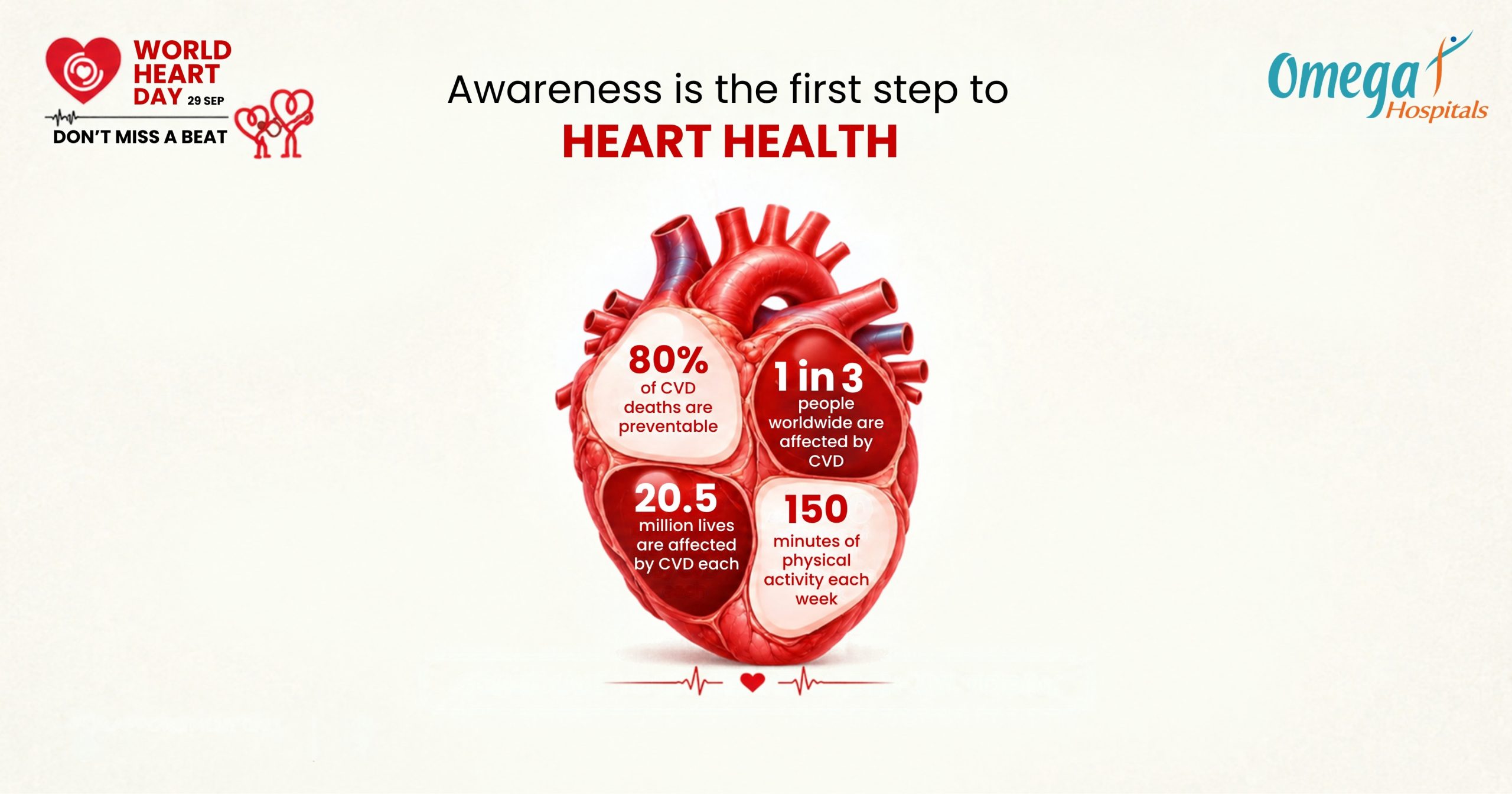
Cardiovascular disease has become one of India’s biggest health challenges.
According to global health estimates, heart disease and stroke together contribute to a significant proportion of deaths in India. Over the last few decades, changing lifestyles, urbanisation, dietary patterns, rising diabetes rates and reduced physical activity have contributed to an increasing burden of cardiovascular disease.
What concerns doctors today is not only the number of people affected, but also the age at which many Indians are developing heart problems.
Heart attacks in people in their 30s and 40s are no longer something we consider extremely unusual.
However, India is a diverse country, and heart disease patterns are not identical everywhere.
Heart Disease Difference in North and South India?
When we compare different regions across India, it is important to understand that there is no single reason behind heart disease.
Lifestyle, food habits, genetics, access to healthcare and metabolic conditions all influence risk.
Several studies have shown that southern states including Kerala, Tamil Nadu, Telangana, Andhra Pradesh and Karnataka have historically reported a higher cardiovascular disease burden compared with some other regions.
One important reason is the higher prevalence of conditions such as diabetes and metabolic disorders in several southern states.
At the same time, northern India has also seen a rising heart disease burden due to rapid urbanisation, increasing pollution, sedentary lifestyles, tobacco use and dietary changes.
The difference between regions is not about one cuisine being “good” and another being “bad.” The bigger concern is how traditional lifestyles have changed.
Across India, people are becoming less physically active, spending more time sitting, consuming more processed foods and experiencing higher levels of stress.
The solution is not to fear where we live.
The solution is to understand our individual risk.
5 Things We Should Not Skip for Our Heart
1. Don’t Skip Your Health Checks
Many people wait until symptoms appear before checking their health.
But some of the biggest heart risk factors are silent.
High blood pressure, high cholesterol and diabetes can exist for years without obvious warning signs. By the time symptoms appear, damage to blood vessels may already have progressed.
A simple health check can provide valuable information about your heart risk.
Do not skip your numbers:
- Blood pressure
- Blood sugar
- Cholesterol levels
- Family history of heart disease
Knowing your risk early gives you the opportunity to make changes before an emergency happens.
2. Don’t Skip Movement
Modern lifestyles have made sitting a normal part of everyday life.
Many people spend eight to ten hours at a desk, travel by car, spend evenings on screens and rarely get enough physical activity.
The heart is a muscle, and like every muscle, it benefits from regular movement.
Exercise does not mean intense workouts or spending hours in a gym.
Walking, cycling, swimming, yoga, strength training or any activity that keeps you active and most important regularly can improve heart health.
The important thing is consistency.
Activity as simple as a 30-minute walk every day over years can make a significant difference.
3. Don’t Skip Paying Attention to Your Plate
Food has always been an important part of Indian culture.
Traditional Indian diets include many heart-friendly foods such as vegetables, fruits, pulses, dals, nuts and spices. The challenge today is that many people have moved towards diets higher in processed foods, excess salt, sugar and unhealthy fats.
A heart-healthy diet does not mean giving up everything you enjoy. It means balance.
You should Include more:
- Vegetables and fruits
- Protein-rich foods
- Whole grains
- Nuts and seeds
And be mindful of:
- Excess salt
- Sugary drinks
- Highly processed foods
- Frequent fried foods
The food we eat every day shapes our health.
4. Don’t Skip Sleep and Stress Management
We often underestimate the effect of stress and poor sleep on the heart.
Long working hours, constant pressure and inadequate rest can affect blood pressure, hormones and overall health.
Many people proudly say, “I can manage with four or five hours of sleep.”
But the heart also needs recovery.
Sleep is not wasted time. It is when the body repairs and restores itself.
Finding time to relax, spending time with family, practising mindfulness, exercising or simply disconnecting from constant stress can support heart health.
Do not skip rest while chasing everything else in life.
5. Don’t Skip Warning Signs
This is perhaps the most important message.
Many people ignore symptoms because they believe they are too young for heart disease.
But heart problems do not always appear dramatically.
Chest discomfort, unusual breathlessness, excessive sweating, dizziness, discomfort spreading to the arm, jaw or back, or sudden unexplained fatigue should not be ignored.
Heart attacks do not always look like the scenes shown in movies.
Sometimes the warning signs are subtle.
Listening to your body can save your life.
Your Heart Does Not Take a Break. Neither Should Your Care for It.
The heart beats continuously from the moment we are born. It works through our busy days, stressful moments and sleepless nights without ever stopping.
It is about not skipping the small things that matter.
Do not skip your health checks.
Do not skip movement.
Do not skip healthy choices.
Do not skip rest.
Do not skip warning signs.
This World Heart Day, let us remember that protecting the heart is not about making one perfect decision.