
Ovarian Cancer Symptoms Mistaken for Gastric Problems
It’s not the symptom that matters most, it’s how often it comes back.
Bloating after a heavy meal is common. So is occasional indigestion.
But,
What if that bloating returns almost every day?
What if your stomach feels full even after eating very little? Or
What if abdominal discomfort doesn’t improve despite medication?
While these symptoms are often linked to digestive problems, they can sometimes be among the early signs of ovarian cancer. Recognizing persistent symptoms, and acting on them, can lead to earlier diagnosis and better treatment outcomes.
Why Is Ovarian Cancer Often Mistaken for Gastric Problems?
One of the biggest challenges with ovarian cancer is that its early symptoms are often vague and overlap with common digestive complaints. Since the ovaries are located close to the intestines and other abdominal organs, changes in the ovaries can produce symptoms that feel more like a stomach problem than a gynecological condition.
Many women initially experience bloating, abdominal discomfort, indigestion, or a feeling of fullness after eating. These symptoms are commonly treated as acidity, gas, or other digestive issues, which can delay medical evaluation.
The difference often lies in how frequently the symptoms occur and how long they persist. Unlike occasional gastric discomfort, symptoms related to ovarian cancer tend to occur repeatedly, become more noticeable over time, and may not improve with routine medications.
Ovarian Cancer Symptoms Every Woman Should Know
The ovarian cancer symptoms are often subtle during the early stages, making them easy to overlook. While these symptoms do not always indicate cancer, persistent or worsening symptoms should not be ignored.
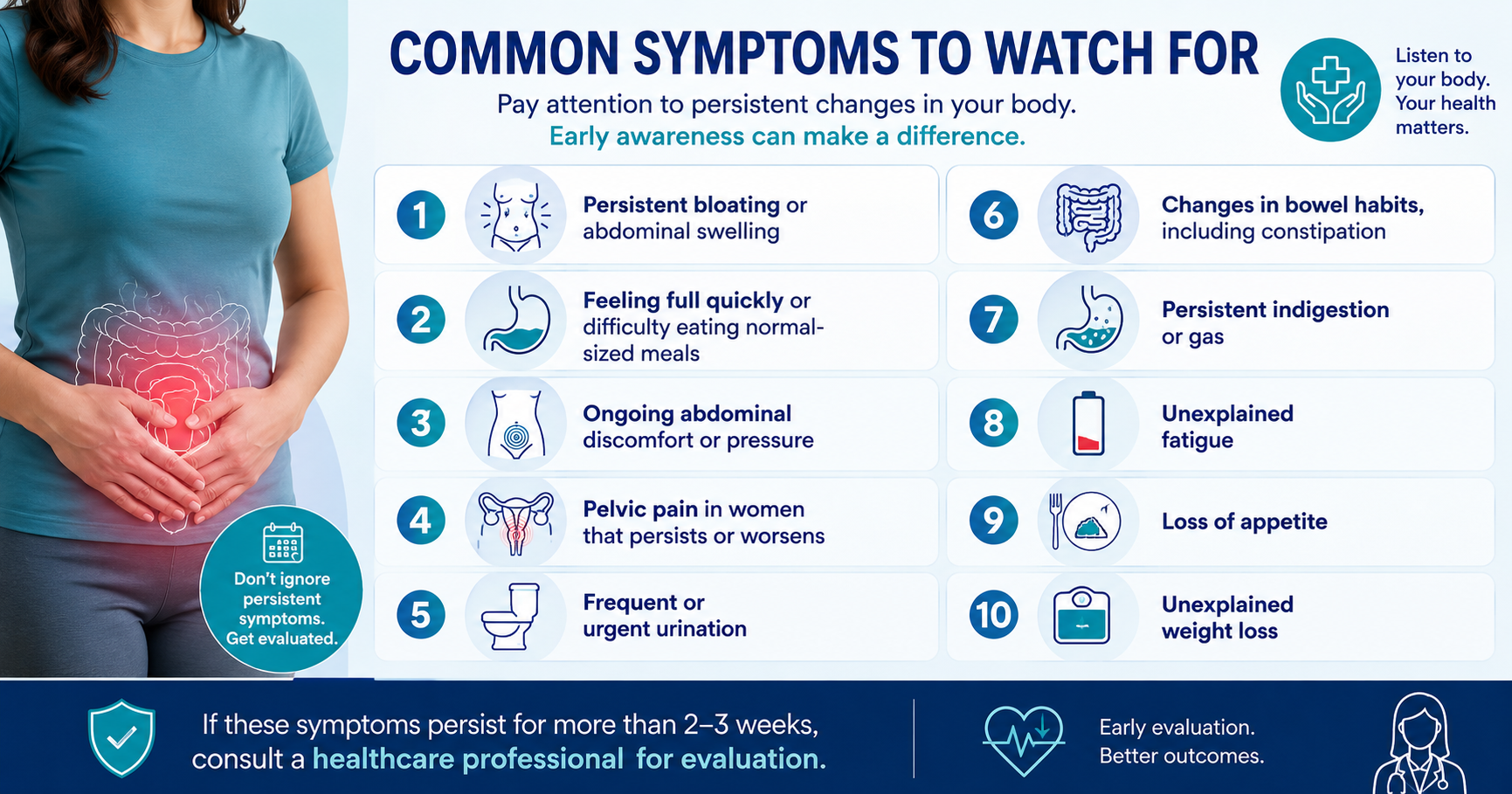
When Is Bloating More Than Just a Digestive Problem?
Bloating is one of the most common digestive complaints and is usually caused by dietary habits, food intolerance, or temporary gastrointestinal issues.
However, bloating and ovarian cancer become a concern when the bloating:
- Occurs almost every day
- Persists for several weeks
- Does not improve despite dietary changes or medication
- Is accompanied by pelvic discomfort
- Causes clothes to feel tighter without weight gain
- Occurs along with feeling full after eating small amounts of food
Persistent bloating is one of the most frequently reported early signs of ovarian cancer, which is why it should never be ignored if it becomes a recurring problem.
Who Is More Likely to Develop Ovarian Cancer?
Although ovarian cancer can affect women of different ages, certain factors may increase the risk.
Having one or more risk factors does not necessarily mean a woman will develop ovarian cancer, but it may warrant closer medical monitoring.
When Should You See a Doctor?
Many women wait for symptoms to become severe before seeking medical advice. However, early evaluation is important when symptoms are persistent.
Consult a healthcare professional if you experience:
- Persistent bloating lasting more than two to three weeks
- Ongoing abdominal or pelvic discomfort
- Difficulty eating or feeling full quickly
- Frequent urination without a urinary infection
- Unexplained fatigue
- Unexplained weight loss
- A family history of ovarian or breast cancer
Timely medical evaluation can help identify the underlying cause and, if necessary, enable earlier diagnosis.
How Is Ovarian Cancer Diagnosed?
Unlike cervical cancer, there is currently no routine screening test recommended for ovarian cancer in women at average risk. Diagnosis usually begins after evaluating symptoms and medical history.
Doctors may recommend:
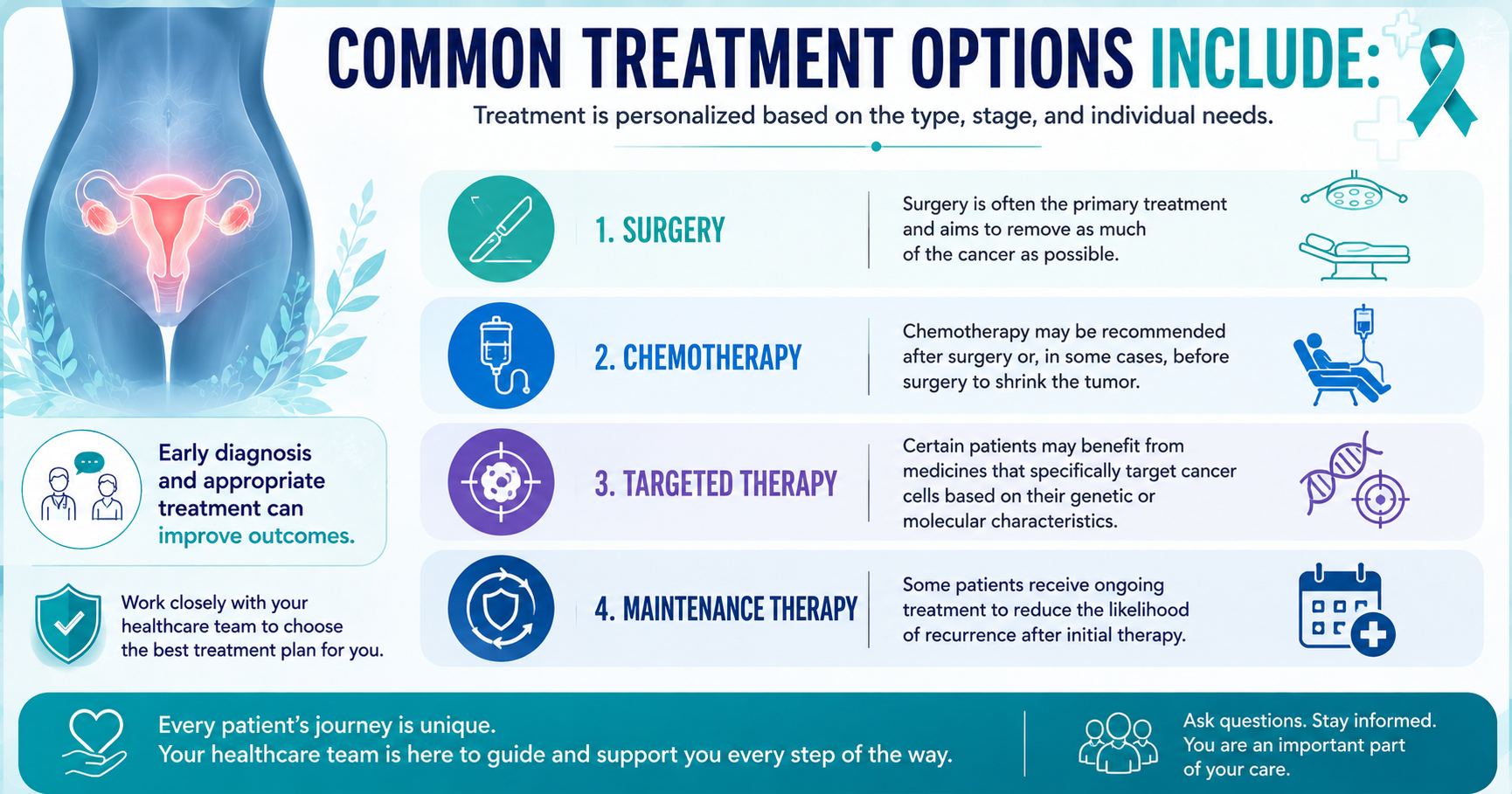
Treatment Options for Ovarian Cancer
Treatment depends on the stage of cancer, the patient’s overall health, and the specific type of ovarian cancer.
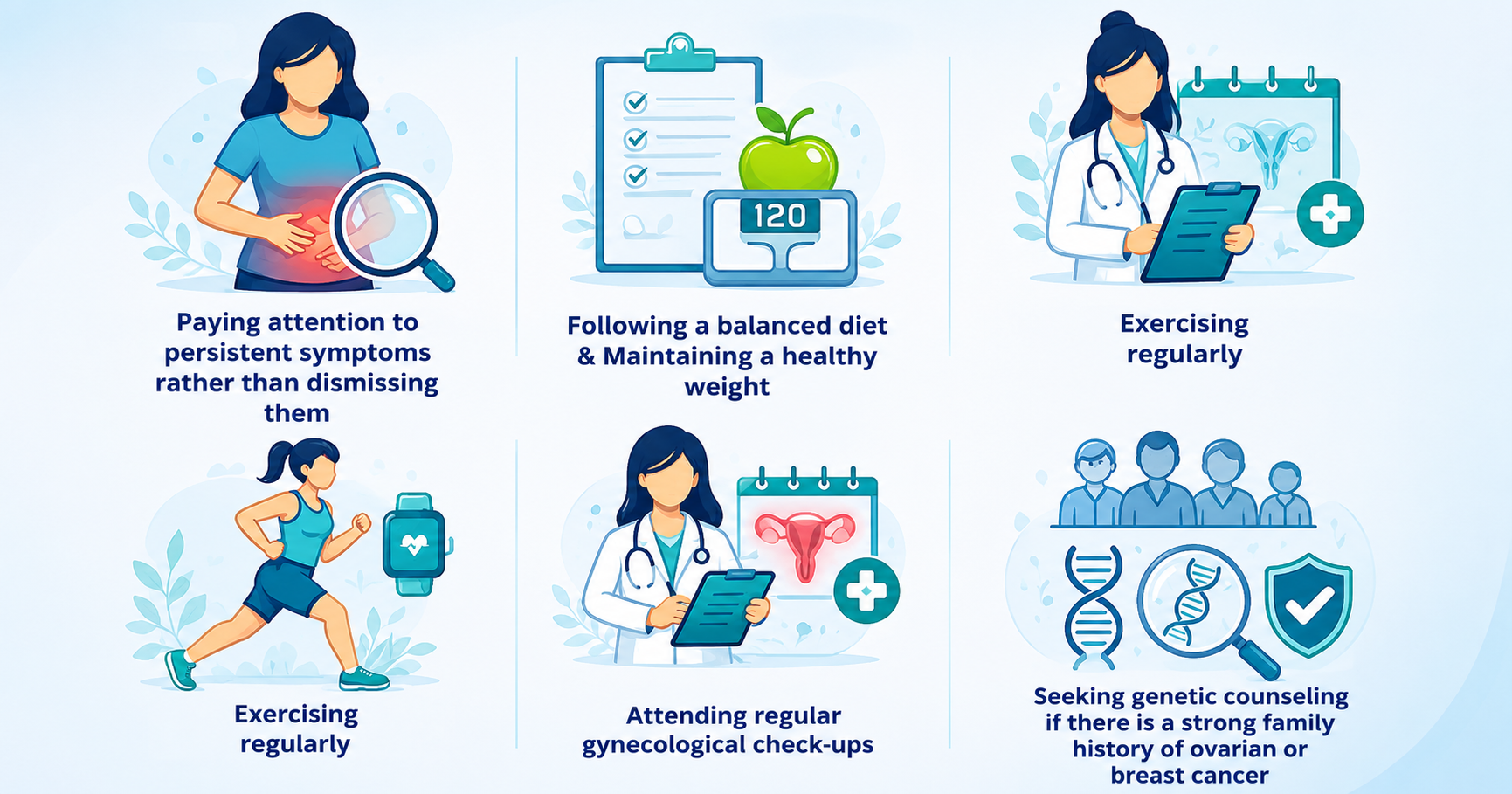
Can Ovarian Cancer Be Prevented?
Although ovarian cancer cannot always be prevented, some healthy lifestyle practices may support overall well-being and encourage earlier detection.
Why Early Detection Makes a Difference
One of the reasons ovarian cancer is frequently diagnosed at an advanced stage is that its symptoms resemble common digestive problems.
Many women continue treating persistent bloating or indigestion without realizing these could be early signs of ovarian cancer. Seeking medical advice when symptoms persist allows doctors to investigate the cause and begin treatment earlier if needed.
Early diagnosis often provides more treatment options and can improve overall outcomes.
Comprehensive Ovarian Cancer Care at Omega Hospitals
At Omega Hospitals, women with suspected or diagnosed ovarian cancer receive comprehensive care through a multidisciplinary team that includes gynecologic oncologists, surgical oncologists, medical oncologists, radiologists, pathologists, and supportive care specialists. Advanced diagnostic imaging, minimally invasive surgical techniques where appropriate, personalized chemotherapy, targeted therapies, and supportive care services are integrated to provide individualized treatment plans tailored to each patient’s needs.
From diagnosis through treatment and follow-up, the focus remains on delivering evidence-based, compassionate care while supporting patients and their families at every stage of the cancer journey.
Listening to your body, recognizing changes that don’t go away, and consulting a healthcare professional early can make a meaningful difference. If bloating, abdominal discomfort, or other digestive symptoms continue despite treatment, don’t assume they’re “just gastric problems.” Early evaluation is one of the most important steps toward timely diagnosis and effective treatment.